What Is AI Visibility and Why Does It Matter for Businesses?
Search is becoming more conversational, and people are increasingly using AI-powered tools to discover businesses, products and information. AI visibility is about making sure your business can be understood and discovered in these new search environments.
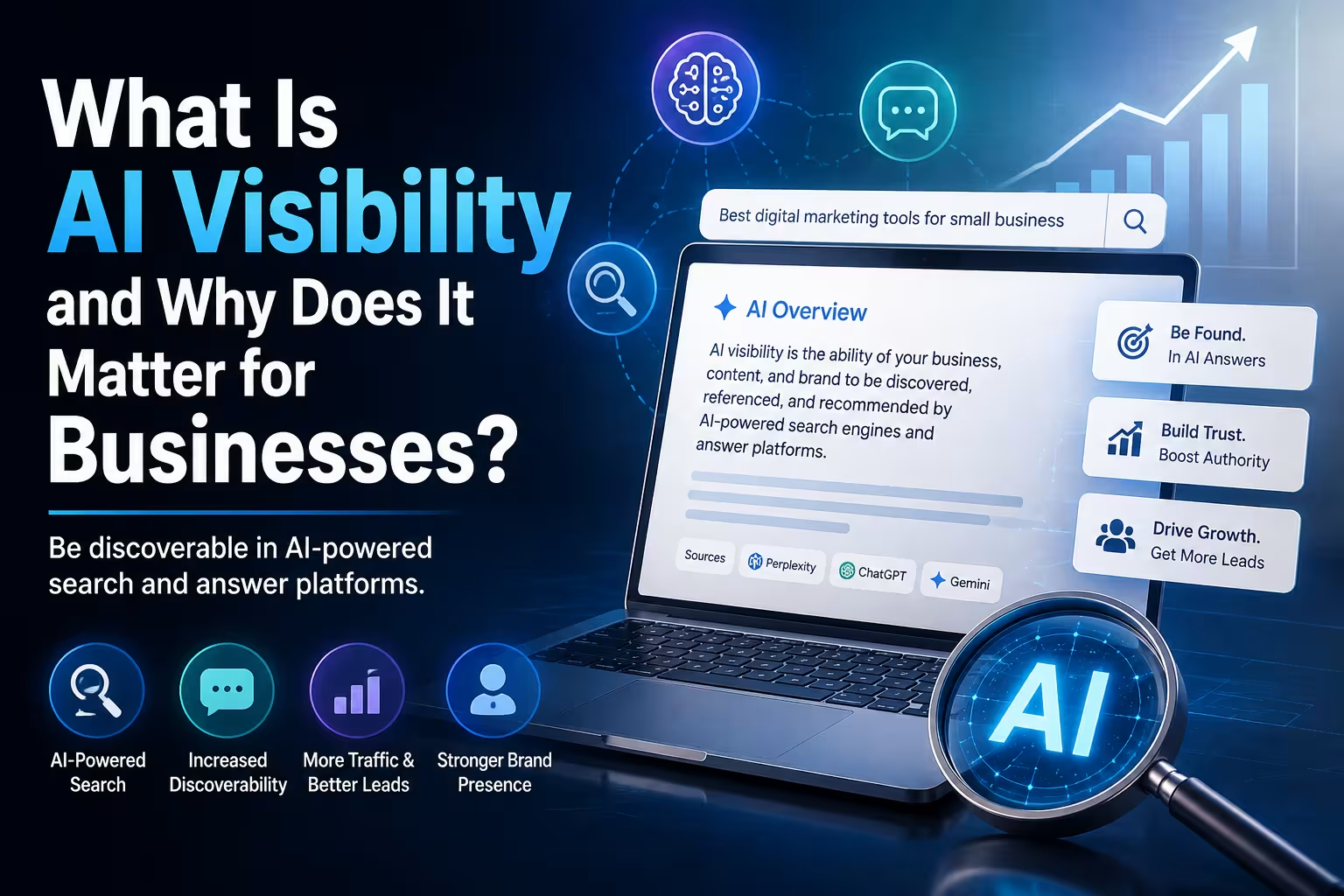
AI visibility is the ability of a business and its information to be discovered, understood and potentially referenced by AI-powered search and answer systems.
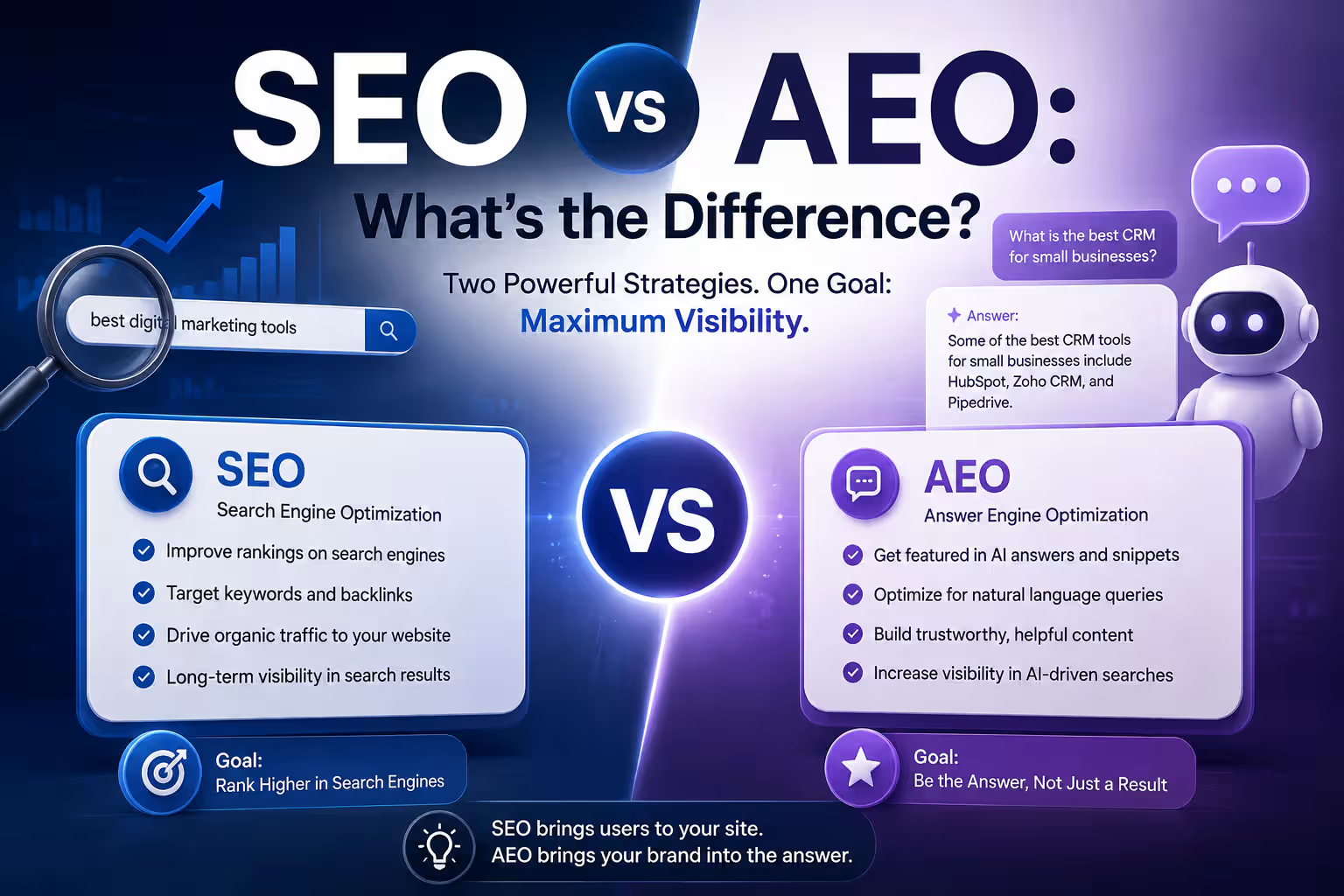
Traditional SEO focuses heavily on visibility in search engine results. AI visibility goes a step further by considering how clearly AI systems can understand a business, its services, expertise, location, products and other relevant information.
There is no guaranteed way to make an AI system mention a particular business. However, businesses can improve their chances by maintaining accurate information, publishing useful original content, building a clear website structure, strengthening their authority and ensuring that relevant AI crawlers can access their public content.
What Does AI Visibility Actually Mean?
AI visibility is a relatively new way of thinking about online visibility.
For years, businesses focused primarily on one question:
"How do we appear when someone searches for our keywords?"
Today, another question is becoming increasingly relevant:
"What happens when someone asks an AI system about businesses like ours?"
For example, someone may ask an AI assistant:
Or:
An AI-powered search system may use information from multiple sources to formulate an answer and may provide links or citations to relevant websites.
AI visibility is concerned with whether your business has a clear, credible and discoverable digital presence that can contribute to those answers.
01. AI Visibility Is Not the Same as "Ranking in ChatGPT"
One of the first misconceptions businesses encounter is the idea that AI visibility works exactly like a Google ranking.
It does not.
AI search systems can use different retrieval methods, search providers, sources, context and ranking signals. The exact process can also change over time.
Even when a website is technically eligible to appear in an AI search product, there is no guarantee that it will be selected for a particular question.
This means AI visibility should be treated as a visibility and information quality strategy, rather than a promise of a specific position.
02. Why AI Visibility Matters Now
The way people find information is changing.
Search engines remain extremely important, but users are increasingly comfortable asking questions in natural language and receiving synthesized answers.
AI-powered search can potentially influence discovery across areas such as:
- Business research
- Product discovery
- Service comparisons
- Local recommendations
- Software research
- Travel planning
- Professional services
- Educational research
This creates another layer of digital visibility for businesses to consider.
Traditional search
A customer searches, sees results, compares pages and chooses a website.
AI-assisted search
A customer asks a question, receives a synthesized answer and may then investigate the sources or businesses referenced in that answer.
03. AI Visibility Depends on Being Understandable
A business can have a beautiful website and still communicate very little useful information to search and AI systems.
Consider two websites.
Website A
"We provide innovative digital solutions for modern businesses."
Website B
"We build WordPress and Webflow websites for small and medium-sized businesses in India, with services covering website development, SEO, AI visibility, automation and lead generation."
The second description provides substantially more context.
It identifies the business, its services, its technologies, its audience and its market.
Clarity is an important part of AI visibility.
04. Your Website Needs to Explain What Your Business Does
AI systems cannot reliably understand information that your website does not clearly provide.
A business website should make important information explicit.
For example:
- Company name
- Primary services
- Products
- Target customers
- Locations served
- Industries served
- Areas of expertise
- Contact information
- Company history
- Case studies
- Relevant credentials
This is particularly important for service businesses.
Instead of simply saying that you are a "digital agency," explain what that means.
Clear relationships between these services help create a more understandable picture of the business.
05. Content Is One of the Biggest AI Visibility Assets
A website with only a Home, About, Services and Contact page may tell visitors what the company sells, but it provides relatively little depth.
A useful content strategy can create a much richer information footprint.
Businesses can publish:
- Detailed service pages
- Educational articles
- Frequently asked questions
- Case studies
- Original research
- Industry insights
- Comparison guides
- How-to articles
- Definitions and explainers
This gives search systems more context about the business and the subjects it actually understands.
06. Original Information Matters
Publishing content is not enough.
The internet already contains enormous quantities of generic information.
A business therefore benefits from contributing something that is genuinely useful or distinctive.
That could include:
- Original data
- Industry observations
- Case studies
- Real project examples
- Expert commentary
- Unique processes
- Detailed comparisons
- Practical experience
For example, instead of publishing another generic article titled "What Is WordPress?", a web agency could publish:
and explain the actual factors affecting development costs, hosting, maintenance, integrations and ongoing requirements.
That creates information with a clear business context.
07. AI Visibility and SEO Are Closely Connected
AI visibility does not mean abandoning SEO.
In fact, many of the fundamentals remain the same.
| SEO Foundation | AI Visibility Benefit |
|---|---|
| Clear website structure | Makes business information easier to interpret |
| Useful content | Provides information that can answer questions |
| Internal linking | Connects related topics and services |
| Structured data | Provides machine-readable context where appropriate |
| Technical accessibility | Allows crawlers and search systems to access content |
| Authority and reputation | Supports trust and credibility signals |
This is why a business should not think of AI visibility as a completely separate website optimisation discipline.
It is better understood as an additional consideration within a broader search and digital visibility strategy.
08. AI Crawlers and Website Accessibility Matter
Your content cannot be surfaced by an AI search system if the relevant system cannot access it.
Different AI platforms use different crawlers and discovery mechanisms.
For example, OpenAI states that websites should allow OAI-SearchBot to crawl their content if they want to be eligible for inclusion in ChatGPT search.
This does not guarantee visibility or placement. It simply helps ensure that the website is technically available to that search system.
Businesses should therefore review:
- robots.txt
- Meta robots directives
- Website accessibility
- Firewall and security rules
- CDN bot protection
- Server response codes
- Indexability
Technical accessibility is a prerequisite for digital visibility.
09. Your Business Information Should Be Consistent
AI visibility is not limited to your own website.
Businesses exist across an ecosystem of online sources.
Depending on the business, this can include:
- Company website
- Business directories
- Professional profiles
- Social platforms
- Industry websites
- Review platforms
- News articles
- Partner websites
Important information should be consistent wherever practical.
For example, if a company describes itself as a Mumbai-based WordPress agency on its website but appears as a software product company elsewhere, the overall digital identity becomes less clear.
Consistent business information helps create a stronger and more coherent online presence.
10. Reviews, Mentions and Reputation Matter
A business should not expect its own website to be the only source of information used to understand its reputation.
External mentions can provide additional context.
Depending on the business, useful sources may include:
- Customer reviews
- Industry publications
- Business directories
- Partner websites
- Case study mentions
- Interviews
- Professional profiles
This is one reason reputation management and digital PR can become increasingly relevant to AI visibility.
A business should aim to build a genuine reputation rather than trying to manufacture mentions simply for AI visibility.
11. AI Visibility Is Not About Manipulating AI Systems
There is already a growing market of services promising to "hack" AI systems or guarantee that a business will be recommended by ChatGPT.
Businesses should be cautious about such claims.
AI search systems can change their models, retrieval systems, ranking methods and sources.
No responsible agency should guarantee that a particular business will always be recommended for a particular question.
The goal should be to build a business that is genuinely understandable, useful and credible online—not to trick an AI into mentioning it.
12. How Can a Business Improve AI Visibility?
A practical AI visibility strategy can begin with the fundamentals.
1. Make your business identity clear
Clearly explain who you are, what you do, where you operate and who you serve.
2. Build detailed service pages
Explain each major service rather than listing services as short bullet points.
3. Answer real customer questions
Build articles and FAQs around genuine questions people ask before buying.
4. Publish original content
Add practical experience, examples, data, case studies and insights that are not simply generic rewrites of existing content.
5. Strengthen technical SEO
Keep the website crawlable, accessible, fast, mobile-friendly and properly structured.
6. Use structured data appropriately
Implement relevant structured data where it accurately describes the content and business.
7. Build external credibility
Develop genuine reviews, mentions, partnerships, references and industry presence.
8. Monitor how your business appears
Periodically test relevant questions across AI-powered search experiences and document what information appears, what is missing and where inaccuracies exist.
AI Visibility vs SEO: What Is the Difference?
SEO and AI visibility overlap considerably, but their emphasis is different.
| SEO | AI Visibility |
|---|---|
| Focuses strongly on search visibility | Focuses on visibility within AI-assisted discovery and answers |
| Often measures rankings and organic traffic | Can involve mentions, citations, references and representation |
| Strong focus on keywords and search intent | Strong focus on entities, context, questions and business identity |
| Technical SEO is essential | Technical accessibility remains essential |
| Content supports search rankings | Content helps systems understand and potentially reference the business |
Why AI Visibility Matters for Small Businesses Too
AI visibility is not only relevant to large corporations.
In some ways, it may be particularly useful for smaller businesses.
A small business can build a highly specific information footprint around:
- A particular city
- A specific service
- A specialised industry
- A particular customer type
- A niche product
For example, instead of trying to become known simply as a "web agency," a company might establish a much clearer digital identity around:
The more clearly the business communicates its actual expertise and market, the easier it becomes for people and systems to understand what it does.
Final Verdict
AI visibility is becoming another important layer of digital visibility for businesses.
It does not replace SEO, and it does not mean trying to manipulate AI systems into recommending a company.
Instead, it means building a digital presence that is clear, technically accessible, useful, authoritative and consistent enough to be understood across modern search and AI-powered discovery systems.
The businesses most likely to benefit are those that start treating their website as more than a digital brochure.
A strong website should explain what the company does, answer customer questions, demonstrate expertise, provide evidence, maintain accurate information and make its content accessible to modern search systems.
SEO helps your business get discovered. AI visibility helps make your business understandable in the age of AI-powered search.
Frequently Asked Questions
What is AI visibility?
AI visibility is the ability of a business and its information to be discovered, understood and potentially referenced by AI-powered search and answer systems.
Is AI visibility the same as SEO?
No. They overlap significantly, but SEO focuses primarily on search visibility while AI visibility considers how clearly a business can be understood and represented in AI-assisted discovery and answer experiences.
Can a business guarantee that ChatGPT will recommend it?
No. AI search systems use multiple signals and can change how they retrieve, rank and present information. Businesses can improve their digital presence, but responsible providers should not guarantee a specific AI recommendation or position.
Does AI visibility replace SEO?
No. Technical SEO, useful content, website accessibility, internal linking, structured data and other established SEO practices remain important foundations for modern search visibility.
Does AI visibility matter for small businesses?
Yes. Small businesses can benefit by building a clear digital identity around their services, locations, expertise and target customers. Specific and useful information can help make a business easier to understand online.
Does AI-generated content improve AI visibility?
Not automatically. Simply publishing large amounts of AI-generated content does not guarantee visibility. Useful, accurate, original and well-structured information is more important than the method used to produce the content.
How can I improve my business's AI visibility?
Start by making your business information clear and consistent, build detailed service pages, answer genuine customer questions, publish useful original content, maintain strong technical SEO, use appropriate structured data and develop genuine external credibility through reviews, mentions and industry relationships.
Can WordPress websites be optimised for AI visibility?
Yes. WordPress provides control over content, page structure, internal linking, structured data, technical SEO and publishing workflows, making it suitable for implementing an AI visibility strategy.